




SpaceX Rocket Crash Moon: Four-Ton SpaceX Rocket Stage Hit the Moon, but Almost No One Saw It
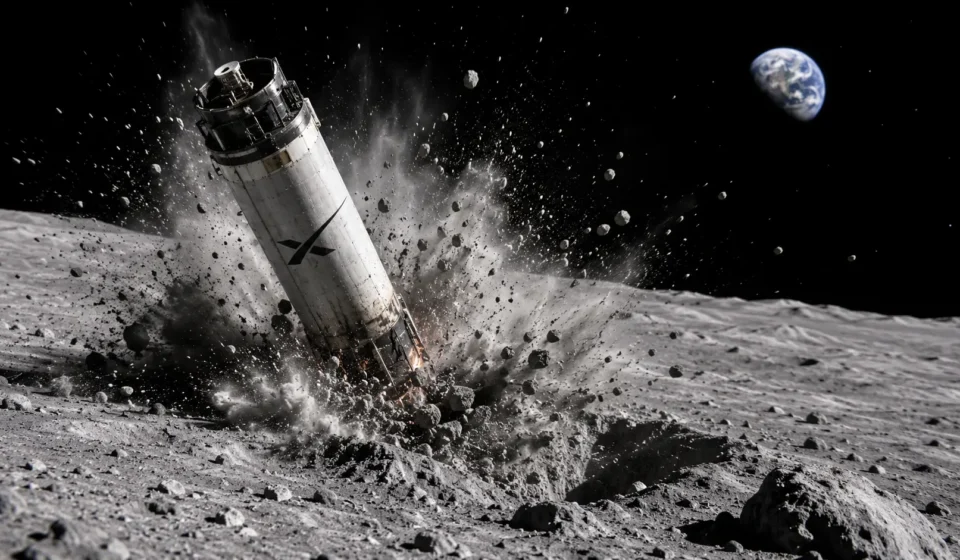
A discarded four-ton SpaceX Falcon 9 upper stage has accidentally crashed into the Moon, creating a fresh impact crater and providing scientists with a rare opportunity to study lunar geology. Although astronomers predicted the impact months in advance, almost no one witnessed the collision because it occurred under difficult viewing conditions on the Moon’s far western edge. The event has quickly become one of the most talked-about stories in the space community, highlighting both the scientific value of lunar impacts and the growing challenge of managing space debris.
What Happened?
The object that struck the Moon was the upper stage of a SpaceX Falcon 9 rocket launched in January 2025 as part of a commercial lunar mission. After delivering its payload, the rocket stage lacked enough fuel to perform a controlled disposal maneuver. Instead, it remained in cislunar space, where the combined gravitational influence of the Earth, Moon, and Sun slowly altered its orbit until a lunar impact became inevitable.
Astronomers tracked the rocket for months and accurately predicted that it would collide with the Moon on August 5, 2026.
A Collision at Nearly 5,400 mph
Scientists estimate the Falcon 9 upper stage hit the lunar surface at approximately 5,400 miles per hour (8,700 km/h). While slower than many natural meteoroids, the rocket’s four-ton mass carried enough kinetic energy to blast a noticeable crater into the Moon and throw a massive cloud of dust and rock into space.
Researchers believe the impact created a crater roughly 20 meters (65 feet) wide, although some scientific models suggest the final measured diameter could be even larger after detailed orbital imaging.
Why Almost Nobody Saw the Impact
Despite widespread interest among astronomers, very few people actually observed the collision.
Several factors worked against visibility:
- The impact occurred near the Moon’s western limb.
- The flash lasted only a fraction of a second.
- The impact happened close to the boundary between light and shadow.
- Amateur telescopes were generally not powerful enough to detect the event.
- No lunar spacecraft happened to be directly above the impact point at the moment of collision.
Because of these limitations, the event remained largely invisible to the public.
Scientists Still Captured Valuable Data
Although the impact wasn’t widely seen, researchers gathered significant scientific observations.
The European Southern Observatory’s Very Large Telescope recorded the expanding dust plume and detected spectral signatures of sodium and lithium. Sodium is believed to have originated from lunar soil, while lithium may have come from the rocket itself. These measurements help scientists better understand impact physics and the composition of both lunar material and spacecraft hardware.
South Korea’s Danuri Orbiter Photographed the Site
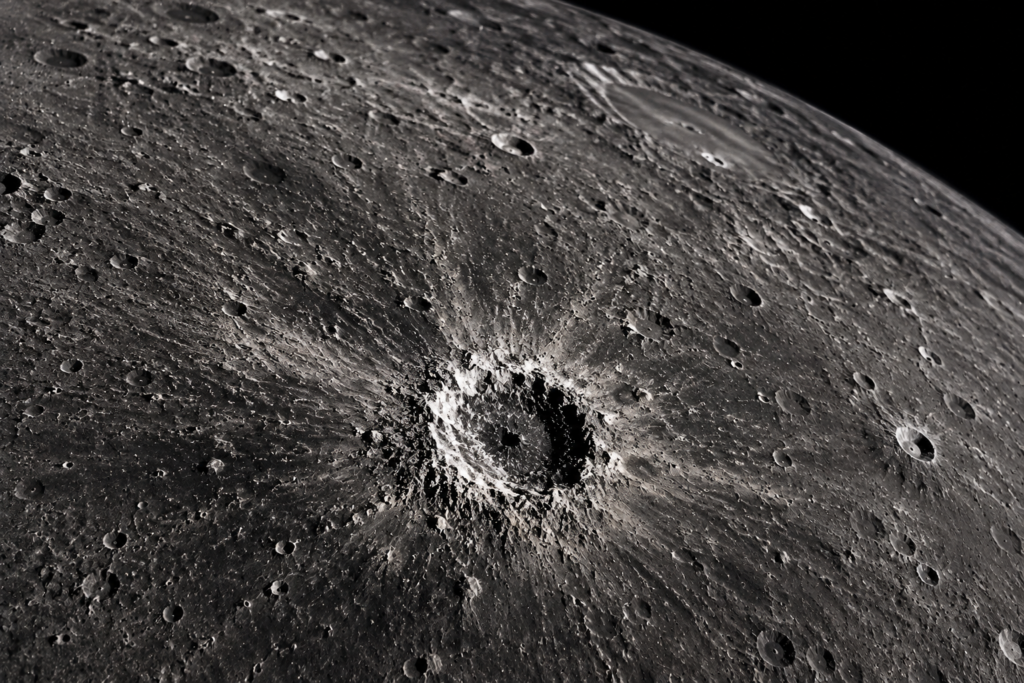
One of the most important discoveries came from South Korea’s Danuri lunar orbiter, which captured before-and-after images of the impact location.
The spacecraft identified a newly formed dark scar and a fresh crater exactly where astronomers predicted the Falcon 9 stage would strike. NASA’s Lunar Reconnaissance Orbiter is expected to conduct additional observations to determine the crater’s exact dimensions and study the surrounding ejecta.
Was This a Planned Moon Crash?
No.
Unlike some NASA Apollo missions that intentionally crashed spent rocket stages into the Moon for seismic experiments, this collision was entirely accidental.
The Falcon 9 upper stage simply exhausted its fuel after completing its mission. Without propulsion, its orbit slowly evolved until it intersected the Moon.
Does the Crash Pose Any Danger?
Experts emphasize that the collision posed no threat to Earth.
The rocket never re-entered Earth’s atmosphere. Instead, it remained in deep space before naturally colliding with the Moon. Scientists stress that such impacts are scientifically valuable and present no danger to people on Earth.
Why This Event Matters
Although the impact itself lasted only moments, it offers researchers a rare natural experiment.
Scientists can now study:
- Crater formation.
- Lunar dust movement.
- Surface chemistry.
- Impact dynamics.
- The behavior of human-made objects striking the Moon.
The data will improve models used for future lunar landings and infrastructure planning.
Growing Concerns About Space Debris
The accidental collision has also renewed discussions about space debris management.
As governments and private companies launch more missions beyond Earth orbit, more rocket stages and spacecraft components may remain in cislunar space. Experts say better tracking systems and disposal strategies will become increasingly important as lunar exploration expands under programs such as NASA’s Artemis initiative.
What Happens Next?
Scientists will continue analyzing data from telescopes and lunar orbiters over the coming weeks. High-resolution imagery from NASA and international partners will help determine the crater’s precise size, the amount of ejected material, and how the impact affected the surrounding terrain. These observations are expected to contribute to future lunar science, planetary defense research, and sustainable exploration practices.
Frequently Asked Questions
Why did the SpaceX rocket hit the Moon?
The Falcon 9 upper stage had completed its mission and lacked enough fuel for a controlled disposal. Over time, gravitational forces altered its orbit until it collided with the Moon.
How fast was the rocket traveling?
The rocket impacted the Moon at approximately 5,400 mph (8,700 km/h).
Was the crash intentional?
No. Scientists tracked and predicted the impact, but the collision itself was accidental.
Is Earth in any danger?
No. The event posed no risk to Earth or its population.
Conclusion
The accidental collision of a four-ton SpaceX Falcon 9 upper stage with the Moon is more than just an unusual headline—it is an important scientific event. Although almost no one witnessed the impact in real time, the observations collected by telescopes and lunar orbiters are expected to deepen our understanding of lunar geology, impact processes, and the challenges posed by space debris. As humanity prepares for a new era of lunar exploration, this unexpected event serves as a reminder that every mission leaves a lasting mark—not only on history but sometimes on the surface of the Moon itself.