



Read the latest Nepal Flood 2026 updates, including official reports on casualties, missing people, damage, rescue operations, and relief efforts.
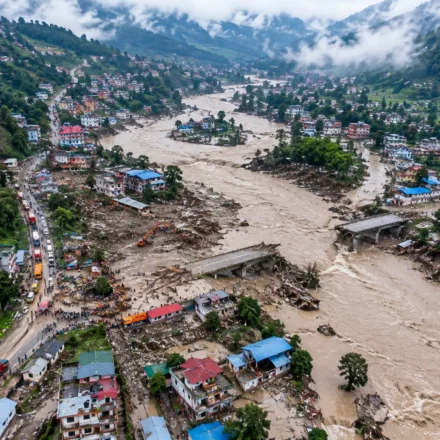
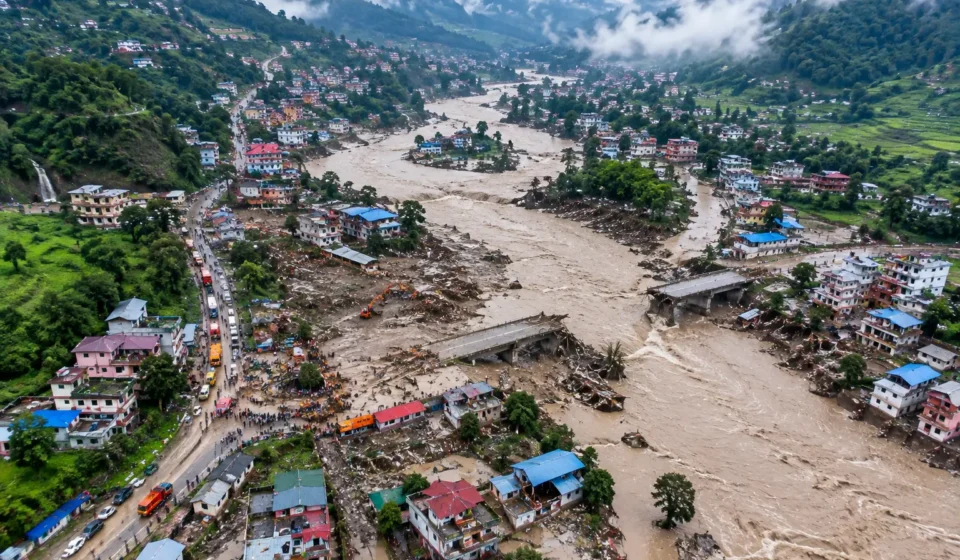
Nepal Flood 2026: Nepal is currently enduring one of the most severe natural disasters in its recent past, following catastrophic flash floods that hit the northern region of the country on August 26, 2026. This calamity, associated with a glacial collapse near the Nepal-China border, unleashed vast quantities of water, mud, rocks, and debris into river valleys and populated areas.
As per the latest updates, the death toll has exceeded 1,300 individuals, with thousands still unaccounted for. Search and rescue teams are actively conducting operations across multiple affected districts.
What Triggered the Nepal Flood?
The disaster was initiated by a significant glacial collapse in the Himalayan region, which caused a powerful influx of water and debris into the Bhotekoshi River and its downstream regions.
The sudden flood obliterated homes, roads, bridges, and other infrastructure in mere minutes. Numerous communities along the river valleys were gravely impacted, leaving residents with insufficient time to flee.
Additionally, the disaster has disrupted hydropower projects, with many workers reported missing from tunnels and other facilities.
Casualties and Missing Individuals
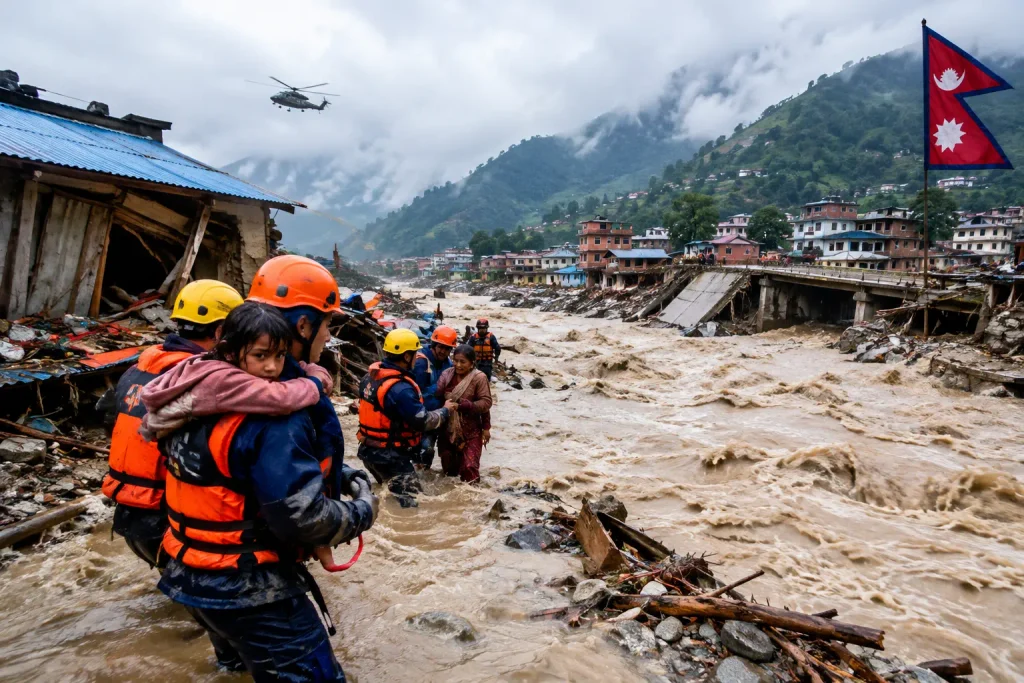
According to Nepal Police, the death toll had risen to 1,342 by September 5, while 4,886 individuals remain missing. Authorities have retrieved bodies from various districts, including Chitwan, Nawalparasi, Nuwakot, Rasuwa, Gorkha, and Dhading.
Due to the fact that many victims are still unidentified, authorities are gathering DNA samples from recovered bodies and their relatives to assist families in identifying their loved ones.
The casualty figures may fluctuate as rescue teams access previously unreachable areas.
Thousands Affected
The floods have wrought extensive devastation across northern Nepal and downstream regions.
Homes have been either destroyed or buried beneath thick layers of mud and debris. Roads and bridges have been swept away, severely hindering rescue teams’ ability to reach isolated communities.
Moreover, the disaster has disrupted electricity, communication, and transportation in the impacted areas.
Earlier evaluations by the government indicated that approximately 1.6 million individuals were impacted by the disaster.
Hydropower Workers Trapped
One of the primary obstacles for rescue teams is locating workers who are trapped within hydropower tunnels.
Numerous hydropower plants sustained significant damage due to the flooding, with hundreds of workers initially reported as missing. Rescue teams have been employing excavators and other heavy machinery to clear mud and debris obstructing the tunnels.
There have also been successful rescues. A Chinese hydropower worker named Lu Haitao was saved after being trapped in a tunnel for around 10 days following the floods.
Woman Rescued After 10 Days
Among the most extraordinary accounts from the disaster is the rescue of Chandika Kumari Shrestha, an elderly woman who was found alive in the wreckage of her collapsed home.
Her family had assumed she was deceased and had commenced mourning rituals. However, rescuers later detected her voice while sifting through the debris.
She was located alive within a small air pocket and subsequently transported to an army hospital for medical care. Her rescue has offered a rare glimmer of hope amidst the widespread destruction.
Roads and Bridges Destroyed
The floods have inflicted severe damage on Nepal’s infrastructure.
Numerous roads and bridges that connect remote communities have been either destroyed or obstructed by mud and debris. This has hindered the transportation of food, drinking water, medicine, and other vital supplies.
Helicopters and temporary access routes are being utilized in regions where conventional transportation has become unfeasible.
Economic Impact
The disaster is anticipated to significantly affect Nepal’s economy.
The damage to infrastructure has impacted hydropower, tourism, transportation, and cross-border trade. Preliminary estimates suggest that direct economic losses could reach billions of dollars, with reconstruction expenses potentially exceeding that figure.
The damage to hydropower facilities is particularly noteworthy as hydropower plays a crucial role in Nepal’s economy and electricity infrastructure.
International Rescue and Relief Efforts
Nepal’s security forces and emergency response teams are spearheading the rescue and recovery operations, supported by international partners.
Rescue teams are employing helicopters, excavators, drones, search equipment, and specialized personnel to find missing individuals and recover bodies.
International aid has also been provided for medical supplies, DNA identification, water purification, and other urgent needs.
Climate Change and Himalayan Risk
The floods in Nepal have heightened concerns regarding the escalating risks faced by communities in the Himalayas.
Scientists and officials have cautioned that rising temperatures may lead to glacier and glacial-lake instability, thereby increasing the likelihood of sudden floods in mountainous areas.
Nepal has urged for increased global attention to the climate threats confronting Himalayan nations, asserting that vulnerable countries require enhanced support for disaster preparedness and climate adaptation.
What Happens Next?
The immediate focus is on locating missing individuals, rescuing survivors, and providing emergency aid to affected families.
Following the search and rescue operations, Nepal will confront the challenging task of reconstructing homes, roads, bridges, hydropower facilities, and other essential infrastructure.
Authorities will also need to bolster early-warning systems and disaster preparedness in at-risk mountain communities.
Conclusion
Nepal Flood 2026 has resulted in a catastrophic humanitarian crisis, with over 1,300 fatalities and thousands still unaccounted for.
The floods have ravaged homes, infrastructure, and vital economic facilities across various regions of Nepal. While rescue teams persist in their search for survivors, stories like that of Chandika Kumari Shrestha’s rescue illustrate that hope endures even in the direst situations.
The catastrophe underscores the critical necessity for enhanced disaster preparedness, better early-warning systems, and increased international collaboration to safeguard at-risk Himalayan communities from future climate-induced disasters.